Troubleshooting your printer. We take a lot of these calls every day. Search around this blog for a while and you can read about all the various troubles people are having. You can also read about the various horror stories of those that have called HP, Epson, Lexmark, Dell, Canon, etc for support. Some of these calls were quite expensive.
So, anyway before you make that call take a look at these troubleshooting tips. They may save you a lot of time and a few dollars! These are pretty simple steps, but the often do the trick.
1. Read your printer’s manual. Not profound advice, but the information in your manual could be very useful. Often that is what you pay a repair person to do, or for that matter the folks at the support hot line.
2. Check your printer manufacturer’s web site. Manufacturers keep their web sites up to date with problems folks have encountered with their printers. A quick search of their site could just reveal the exact problem you are having and an effective solution.
3. Is your printer receiving power? In other words . . . Is it plugged in? Is it turned on? Is your power strip turned on? Is the outlet your printer (or power strip) is plugged in to receiving power? The most common problem being that the printer is not turned on. Check the printers power before doing anything. Also make sure none of the LED lights on the printer are flashing. If they are refer to #2 and you will receive direction on how to solve.
4. Check your cables. If you can’t print it may be because the cables that connect your printer to your computer are not connected. Make sure your cables are securely connected to both your computer and printer.
5. Is your printer beeping? Some of the new printers actually beep when there is an issue. Most beeps occur when the printer is out of ink or paper.
6. Can you test print? Most printers are built with an automatic test print feature. This means that you don’t have to use your computer to initiate a test print page. You will need to consult your user manual for the button, or sequence of buttons, to push, but if you can print a test page from your printer it tells you that there is not a problem with your printer. The trouble then lies in the connection to your computer (See #4) or the software on your computer that communicates with the printer.
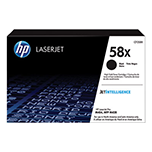
7. Make sure your ink cartridges have enough ink in them and that they are installed correctly. If using a toner cartridge, do the same - make sure there is enough toner in the cartridge and that it is installed correctly.
8. Run the print head cleaning utility. Most printers do this by themselves (clean the print head), but in some cases an additional cleaning is necessary to improve performance. You will need ton consult your user manual for direction on how to do this.
9. Do you have a paper jam? Paper jams happen quite often, and are a big pain! When you have a paper jam you must be sure not to use the “brute force” tactic to remove the paper. This tactic often results in major damage to the printer. Our friends at DUXCW have the best tips for fixing a paper jam:
Always read the manual on how to clear a jam. Don’t be a “gorilla” with your printer! You can easily damage a printer (strip gear threads, etc.), or even get hurt, if you do not follow instructions and are not careful. Turn the power off–unplug it. You have 110 volts running around the inside many printers. And print heads, gears, etc. like to nip fingers.
Laser printers have some very fine wires to remove static charges from the paper near the fuser mechanism which will break if you aren’t very careful. Also, the fuser itself can be very hot (it fuses/melts toner to the paper).
Don’t move a print head unless the instructions direct it. You can damage the belt, etc.
Address labels cause many paper jams and cannot always be seen. The old shirt cardboard trick can be used to dislodge them from many printers. Just feed a shirt cardboard (or cut a piece of like-sized cardboard form a file folder) through like a sheet of paper and wiggle the label loose and out.
Staples, paper clips, dog hair, and cookie crumbs are among the many things we have coaxed out of printers. A staple will raise havoc with the drum in laser printers. If you see vertical lines on pages printed by a laser printer (or copy machine), the drum is probably scratched. Replacing it can be a very expensive repair, indeed.
If jams persist, or the printer won’t feed paper, there is a good chance that gears are stripped or rollers are worn-down or have flat spots. Fixing this sort of problem may require specialized tools and elaborate alignment procedures and is often best done at a printer repair depot. It is not usually economically feasible to send low-end ink jet and dot matrix printers, etc. to a repair depot. Sometimes roller problems can be fixed by cleaning the rollers.
Changing to a different kind of paper may help. Refer to your user manual for guidance.
On humid days, slightly damp paper can cause jams by sticking together causing more than one sheet to be fed at a time. Try removing the paper from its tray, etc. and fanning it. Make sure the edges or corners aren’t curled and the tray is either not too empty or too full. Read the book (user manual).
10. Is your printer memory full? Printers have a certain amount of memory, just like your computer, and it possible for the memory to fill up. When it does your printer will just freeze up. The quickest way fix this is to turn the printer off. Wait about 30 seconds before turning your printer back on. The memory should not be empty.
There are quite a few tricks we’ve used, and heard about over the years, but these are the most “scientific”. We are a little hesitant to post the “off the record” or “experimental” tips we’ve suggested. But, if you would like to share yours, go ahead.